
RPT Models – Highest Precision
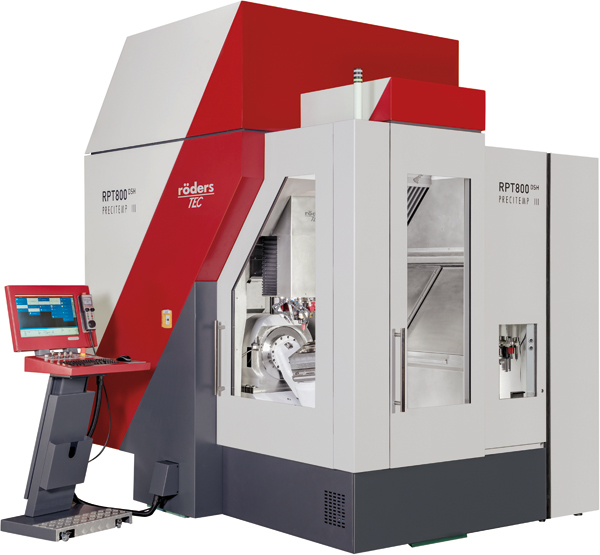
Key features of the RPT machines are the PRECITEMP® technology, which ensures thermal stability and thus high precision even when workshop temperatures fluctuate, and the NANOTOL® technology, which achieves sub-micrometre precision in the linear axes. As a result, in many applications, these machines often outperform expensive machines fitted with hydrostatic guideways, such as the RHP models. Compared with the high-precision RXP models in praxis, tolerances and surface roughness are frequently reduced by at least half.
The following machines are currently available:
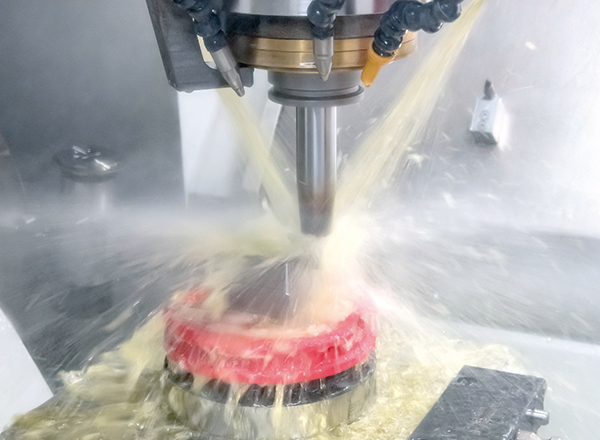
Compared with the RXP machines, the motors are more powerful and, in combination with a very rigid structure, enable even higher stroke frequencies for jig grinding. During drilling and roughing, the greater power offers more reserves and the dynamic performance is correspondingly higher, resulting in shorter machining times.
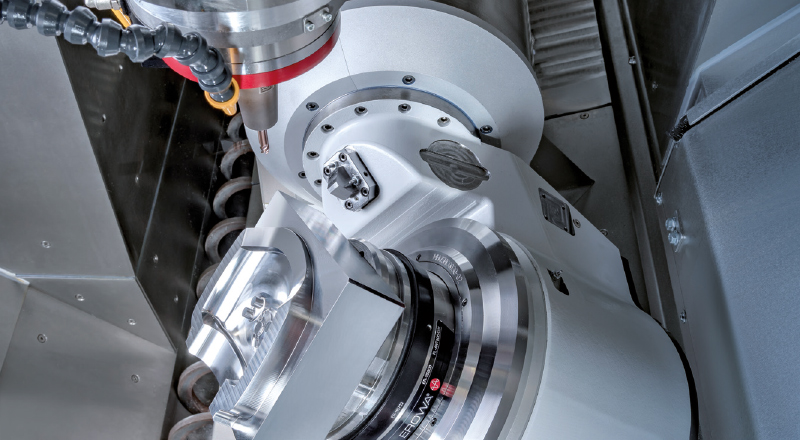
The 5‑axis machines have outstanding design features:
- Improved temperature control of the wear-free torque motors (direct-drive technology) and the axis bearings to ensure thermal stability
- Strong two-sided and precision-optimised support of the C‑axis for high rigidity and precision
- High-resolution optical encoders in all axes
- Minimum mass inertias in the moving axes
- Special Roeders 5‑axis geometry compensation for maximum accuracy, even during long machining operations
- C‑axis swivel direction perpendicular to the X‑axis movement for dynamic decoupling
- Integration of various chucks or tables with T‑slots possible
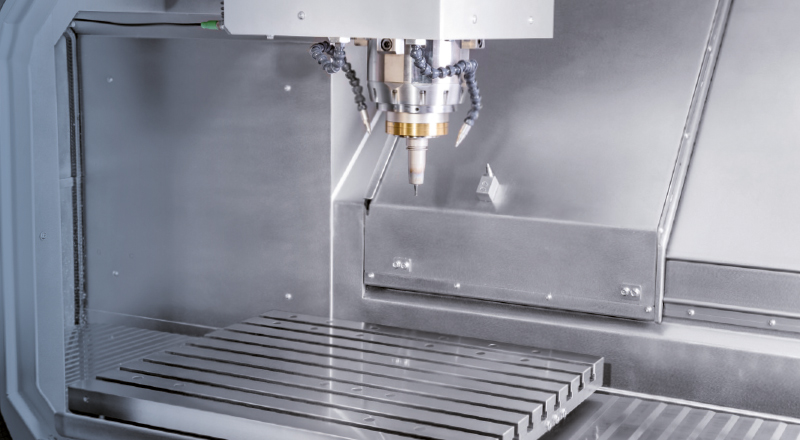
The machining range of the 3‑axis machines is matched to the machine’s table size in such a way that the machine can mill the surface of the table itself to achieve perfect flatness and parallelism using a fine finishing cut.

The modern design of the RPT models reflects the high precision and dynamics of the machine technology. Particular importance was devoted to simplest operation, like unlocking the doors at the touch of a button on the terminal. The good accessibility of the machining area from two sides, well known from Roeders, has been maintained, which offers great advantages, especially for automated machines. (Image similar)
The RPT models were designed for durability and energy efficiency down to the last detail.
The electrical cabinet usually is integrated into the machine. At the RPT series, the electrical cabinet stands alone next to the machine so that electronic components are not affected by vibrations from machining or the dynamics of the machine. In addition, the high weight of the machine and the large distance between the machine feet ensure low stress despite the high dynamics of the axes. Numerous measures have been undertaken to significantly reduce energy consumption, e.g. a power-controlled cooling unit.

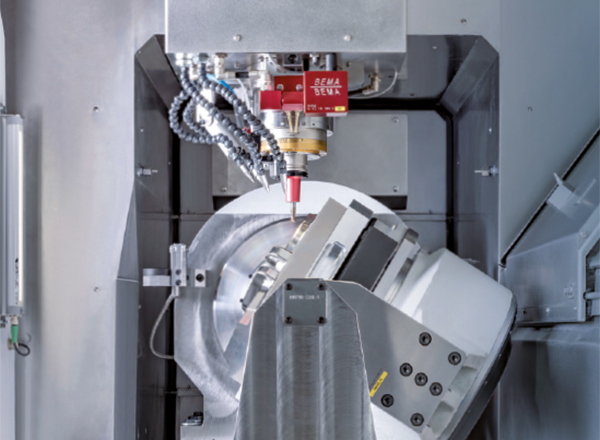
The working area of the RPT machines is fully covered with stainless steel sheet metal, ensuring that it retains its attractive appearance even after prolonged use. The steep angles of the surfaces and feed screws in the working area prevent the build-up of chip nests.